
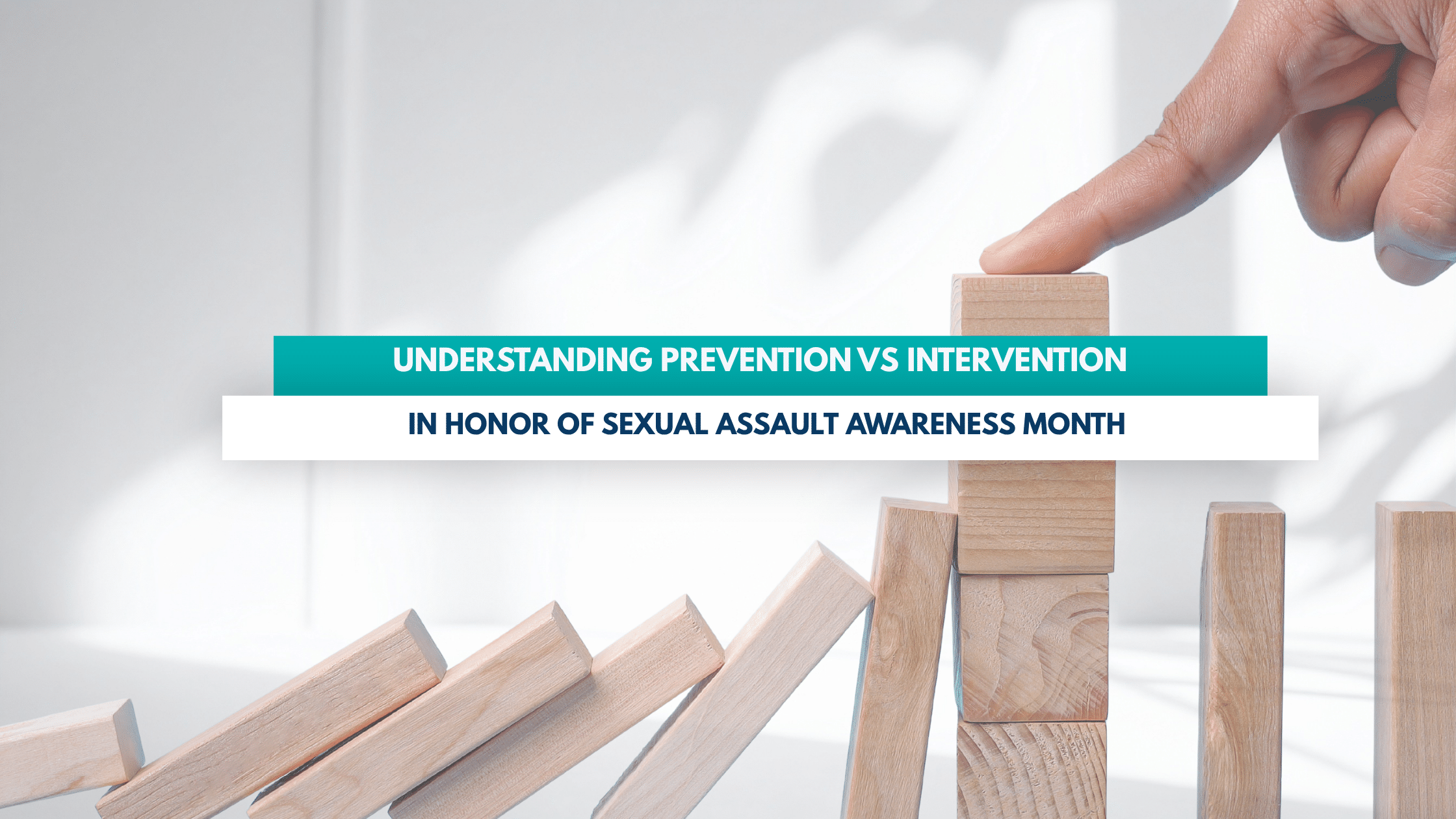
Understanding Prevention vs Intervention: Why the Difference Matters
Intervention is important because it helps address the impact of harm that has alreadyhappened. But long-term change comes from prevention.
Understanding Prevention vs Intervention: Why the Difference Matters
As sexual assault awareness has grown, so has the conversation around how to stop it. But one common point of confusion still comes up: what’s the difference between prevention and intervention, and why does it matter?
The answer is simpler than it sounds, and understanding it can help people take more effective action.
Prevention is about stopping sexual violence before it ever happens. It focuses on creating a culture where harm is less likely to occur in the first place. This includes teaching consent, encouraging respectful communication, bystander intervention, and challenging harmful norms such as jokes, attitudes, or beliefs that excuse, ignore, or normalize harmful behavior.
Intervention, on the other hand, happens after harm has occurred. It refers to responding to a situation once sexual violence or harm has taken place. This might include supporting someone who has experienced harm or, after a crisis, helping them access resources, or reporting what happened so further harm can be prevented.
Prevention is proactive, whereas intervention is reactive.
Where People Get Confused
Overlap often happens because stopping harm after it begins can sometimes prevent further harm. But the timing matters: intervention takes place after a harmful act has already occurred, while prevention aims to stop that harm from happening at all.
Focusing only on intervention leaves a gap. If we only respond after harm occurs, we are not addressing the conditions that allow it to happen in the first place.
Why Prevention Matters More Than It Seems
Intervention is important because it helps address the impact of harm that has already happened. But long-term change comes from prevention.
Prevention works by addressing root causes such as:
• Social norms that excuse or minimize harmful behavior
• Lack of understanding around consent and boundaries
• Communication patterns that discourage speaking up
• Financial insecurities caused by unemployment, wage gaps, or lack of financial literacy
• Unsafe built environments in our neighborhoods, such as a lack of streetlights and/or sidewalks
• Lack of an emotional support system, such as having no trusted adult or safe person to talk to
Therefore, we need to address these risk factors through a solution-focused approach. When these issues are addressed early and consistently, fewer harmful situations occur in the first place.
How They Work Together
It is not about choosing prevention or intervention; we need both.
Prevention addresses those root causes that indirectly contribute to violence in our communities. Intervention responds to harm after it has already occurred.
Prevention builds safer conditions over time, while intervention addresses harm in the moment and supports those affected. Both matter, and lasting change starts with strengthening prevention while maintaining effective intervention.