
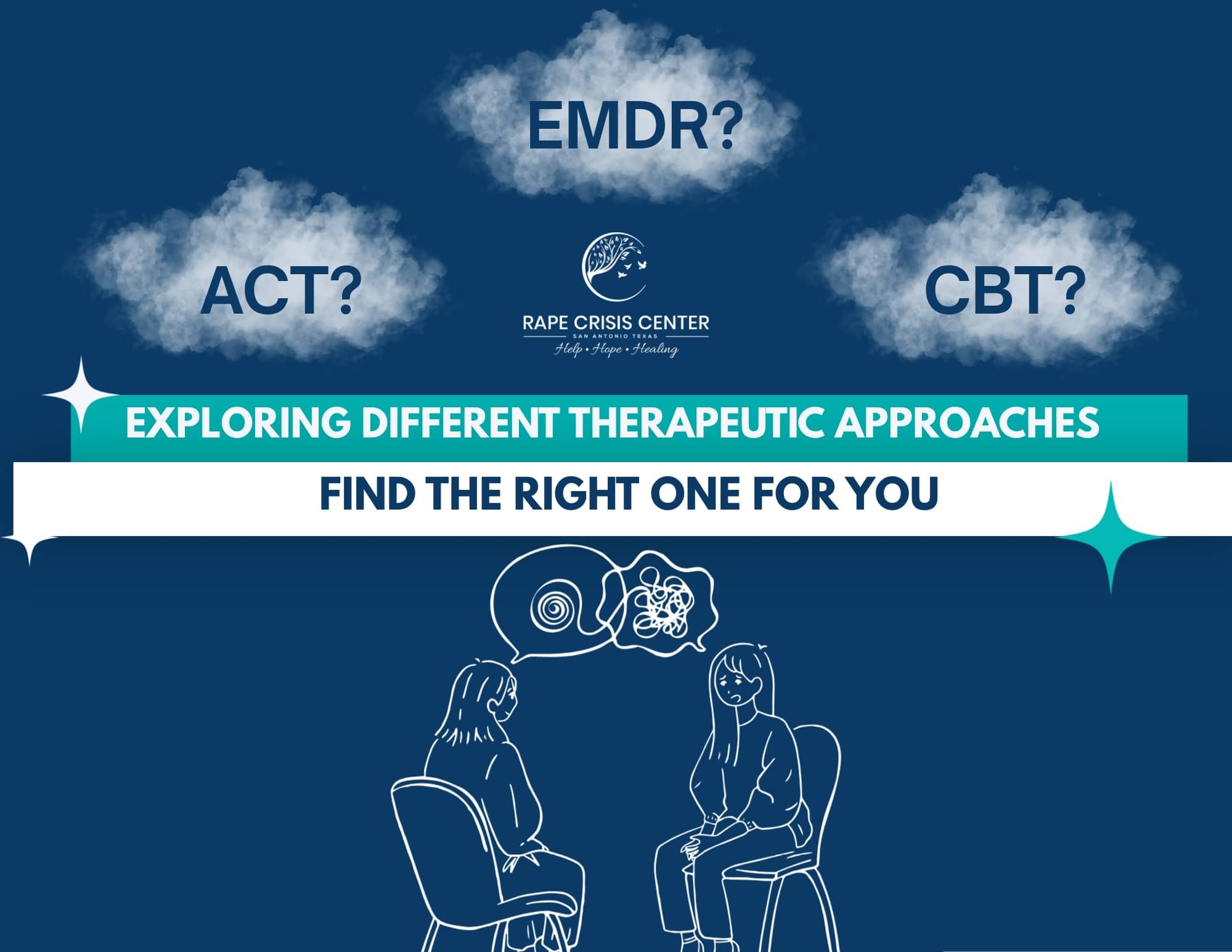
Find the Right One for You: Exploring Different Therapeutic Approaches
Taking care of your mental health is just as important as caring for your physical well-being. Therapy isn’t one-size-fits-all.
Taking care of your mental health is just as important as caring for your physical well-being. Therapy isn’t one-size-fits-all. Each person is unique, and there are a variety of approaches designed to meet different needs, personalities, and goals. Understanding your options can help you feel more confident about taking that first step toward support.
Here are some common (though not exclusive) therapy approaches counselors may use at a Rape Crisis Center:
Cognitive Behavioral Therapy (CBT)
One of the most widely used and researched forms of therapy, CBT focuses on the connection between thoughts, feelings, and behaviors. It helps people identify negative thinking patterns and replace them with more balanced, constructive ones. CBT is often structured, goal-oriented, and effective for anxiety, depression, and many other concerns.
Acceptance and Commitment Therapy (ACT)
ACT encourages people to accept difficult emotions rather than fight them. The focus is on mindfulness, self-awareness, and committing to actions that align with your values. Instead of trying to eliminate distress, ACT helps you build a meaningful life alongside it.
Eye Movement Desensitization and Reprocessing (EMDR)
EMDR is a specialized therapy often used to treat trauma and post-traumatic stress. It involves recalling distressing memories while engaging in guided eye movements or other forms of bilateral stimulation. This process helps the brain reprocess traumatic experiences so they feel less overwhelming over time. Many people find EMDR helpful for reducing the emotional intensity connected to past events.
Finding What Works for You
Over time, your needs and preferences may change, and your therapeutic approach can evolve as well. Some people benefit from structured, skills-based approaches like CBT, while others may prefer therapies that emphasize acceptance, relationships, or deeper emotional exploration.
It’s also completely normal for progress to take time. Some people notice improvements within weeks, while others need longer to find the right fit and build momentum. What matters most is consistency, openness, and working with a qualified professional who listens and adapts the plan to your needs.
You don’t have to navigate this alone. If you are ready to take your next step in healing, reach out to your local Rape Crisis Center to learn more about available services, ask questions, or schedule an appointment at 210.349.7273. Support is available, and help is within reach.