
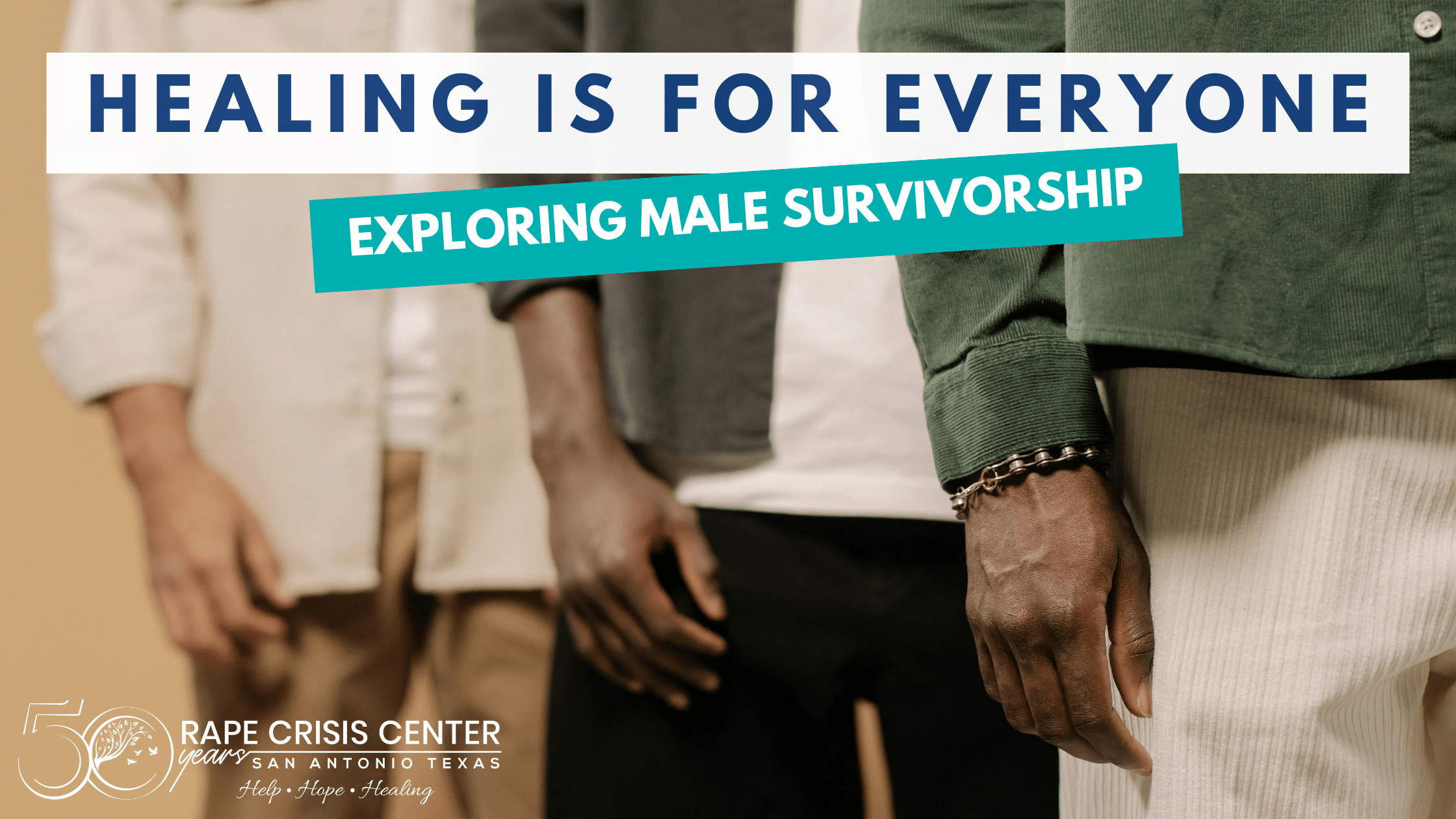
Exploring Male Survivorship
Despite similarities to other survivors, male survivors face unique challenges and fears. Healing belongs to everyone.
Exploring Male Survivorship
When it comes to sexual violence, certain groups are left out of the conversation. Often, discussions of sexual violence center around women and girls. While these populations experience violence at high rates, the fact is that men and boys are victimized too— at comparable rates to women and girls.
Myths and Facts of Male Sexual Harm
Sexual violence, especially sexual violence of men and boys, is often associated with many myths that prevent survivors from getting the help they deserve.
Myth: Men are always looking to engage in sexual activity.
Fact: Consent to sexual activity must be expressly given by a man the same as a woman. Not wanting to engage doesn’t make someone “less of a man.”
Myth: Men are only assaulted by other men.
Fact: Men are assault by both men and women.
Myth: Men are always able to resist and fight their attacker.
Fact: Men can freeze during sexual assault, be under the influence of drugs or alcohol, or experience force or coercion.
Challenges to Coming Forward
Despite similarities to other survivors, male survivors face unique challenges and fears. Whether it’s stigma associated with the ability to fight back, fear of losing relationships or being ridiculed, self-doubt, concern over confidentiality, or misunderstanding what they experienced was assault, all male survivors are deserving of a safe space to share their experiences and receive validation. Healing belongs to everyone.
Tips for Your Healing Journey
- Don’t do this alone- connect with other male survivors who can understand and validate your experiences.
- Reject perfectionism- there is no “right” way to heal! Find peace, growth, and acceptance in the imperfection of your journey. Progress is better than perfection!
- Believe your own truth- your thoughts and feelings are valid— it’s ok not to be ok.
- Learn the skill of resilience- it isn’t about trying to avoid the stress, it is about learning to cope and thrive within the stress.
How Resilience can be a Protective Factor
Resilience is a skill like any other, and it can be strengthened and used as a protective factor, keeping us safe from further harm. Here are some ways to promote resilience and focus on healing:
- Establish positive relationships of all kinds, work-related and personal.
- Practice mindfulness to stay in the moment and be present for yourself.
- Use self-care strategies to help you be your best.
- Seek out a sense of purpose, allowing you to establish a belief in something bigger than yourself. Purpose is a powerful agent for change!
Reach Out for Support
You do not have to face this alone. At the Rape Crisis Center, we honor and uplift male survivors of sexual violence. Their stories matter. Their healing matters. And their courage deserves to be seen.
The Rape Crisis Center offers free, confidential support through our 24-hour hotline at 210-349-7273. Our trained advocates and counselors are here to listen, support, and walk with you through the road ahead.